

Does AI Content Rank on Google? What Actually Works in 2026
Does AI content rank? Yes when it is accurate, original and reviewed; no when it is mass-produced filler. What Google's policy says and a workflow that ranks.
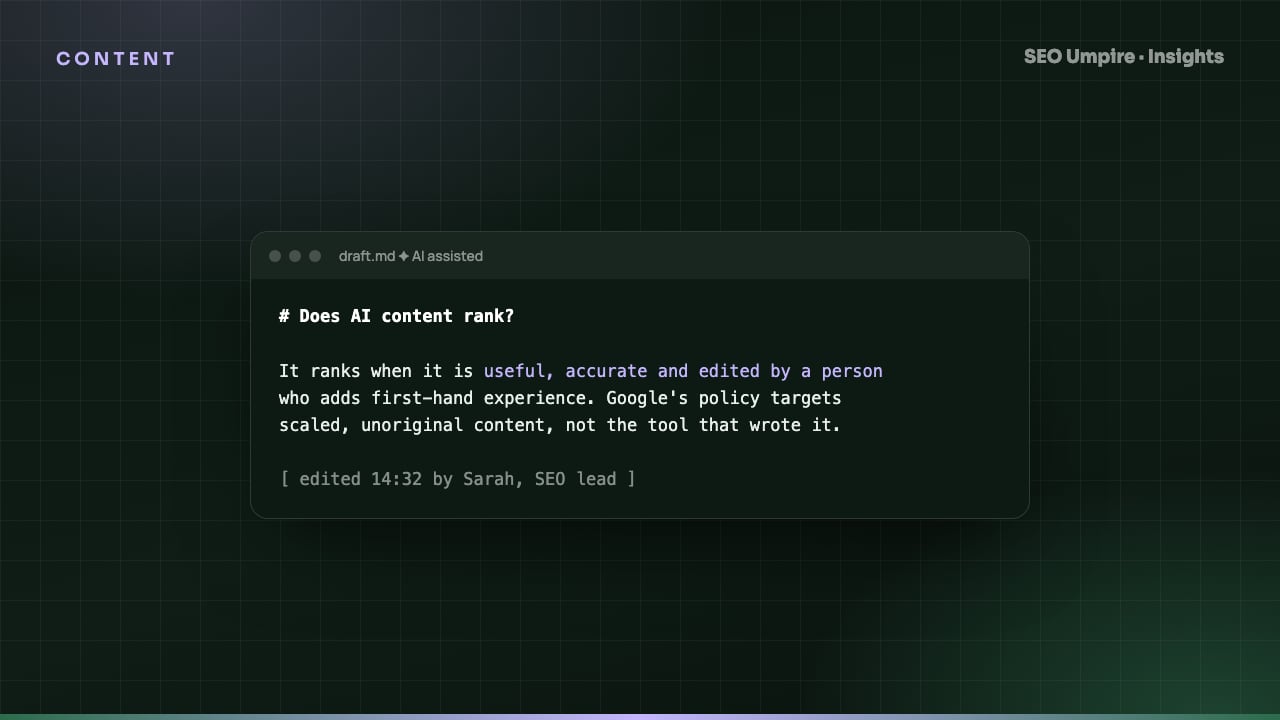
Yes, AI content ranks on Google, as long as it is accurate, original, useful and reviewed by someone accountable for it. Google's published position is that it rewards high-quality content however it is produced, and its spam policies penalize scaled content abuse, meaning large volumes of pages created to manipulate rankings with little value, whether written by a model or by a human content farm. The practical answer is that AI content ranks when it would have ranked if a person had written it, and fails when it is generic, unverified filler.
This post sets out what Google has actually said, what the failure patterns look like, and a production workflow that holds up in competitive results.
What does Google say about AI-generated content?
Google has made three things clear in its public guidance:
- Automation is not spam by itself. Google's guidance on AI-generated content states that using automation, including AI, to generate content is not against its guidelines when the goal is to help people, not to manipulate rankings.
- Scaled content abuse is spam. The spam policies name "scaled content abuse": generating many pages for the primary purpose of manipulating search rankings and not helping users. The policy explicitly says it applies regardless of whether the content was made by automation, humans or a mix.
- Quality is judged by the helpful content signals. Does it demonstrate experience, expertise, authoritativeness and trust? Is it original? Does it leave the reader satisfied? These apply to every page.
So the question "does AI content rank" is really the question "does this page deserve to rank". The tool is irrelevant to the algorithm; the output is everything.
Why does most AI content fail to rank?
The failures are predictable and have nothing to do with detection.
- It says what every other page says. A model prompted with "write an article about X" produces the consensus of its training data. The result is a page that adds no new information, which is exactly what Google and answer engines have no reason to surface.
- It is not verified. Models state plausible-sounding wrong facts. One wrong statistic, product spec or legal detail destroys trust for the whole domain.
- It has no experience in it. No screenshots of real tests, no first-hand numbers, no "we tried this and it broke". The E in E-E-A-T is the hardest thing for a model to fake; see the E-E-A-T SEO guide.
- It is published at a volume nobody reviews. Five hundred pages in a month with one editor is scaled content abuse in all but intent.
- It is thin on the actual query. Long intros, restated headings, and a conclusion that summarizes the intro. Readers bounce, and engagement signals follow.
AI content that fails vs AI content that ranks
| Dimension | Fails | Ranks |
|---|---|---|
| Source of facts | The model's memory | Your data, tests, interviews, documentation, cited sources |
| Author | "Admin" or none | A named person with relevant credentials and a bio |
| Originality | Restates the top ten results | Adds a number, a method, a comparison or a result nobody else has |
| Editing | Published as generated | Edited by someone who could have written it |
| Structure | Long preamble, generic headings | Answer-first intro, question-led headings, tables, steps |
| Volume | Hundreds per week | As many as the review process can genuinely handle |
| Purpose | Fill keyword gaps | Answer a question better than the current result |
How to produce AI-assisted content that ranks: a 7-step workflow
- Start with a query and a reason to win it. Pull the target keyword and the questions behind it from the keyword research tool and from Search Console. Read the top five results and write down, in one sentence, what your page will add that they lack.
- Gather original inputs before drafting. Your own data, a test you ran, customer questions, an expert's notes, screenshots, product specs from the source. This is the step most teams skip, and it is the step that decides the outcome.
- Brief the model with those inputs, not with a topic. Give it the outline, the facts, the audience and the point of view. Use SEO Umpire's AI content tool to draft against the brief and to generate question-led headings.
- Edit as an expert, not a proofreader. Cut anything generic. Add first-hand detail. Rewrite any claim you cannot verify or delete it.
- Fact-check every number, name, date and specification against a primary source. Link to the source.
- Structure for extraction. A 2-3 sentence direct answer in the first paragraph, H2 and H3 headings as questions, a comparison table, a numbered process, an FAQ block with FAQPage schema. The on-page SEO checklist covers the rest.
- Publish under a real author and monitor. Put the author's name, role and bio on the page. Track the page's keywords in the rank tracker and revisit it at 30 and 90 days.
Does AI content get cited by ChatGPT, Perplexity and AI Overviews?
Answer engines have the same preference as Google, only sharper. They cite sources that give them a specific, confident, attributable fact to quote. Generic AI content has nothing quotable, so it is skipped. Content with original numbers, clear definitions, named authors and clean structure gets lifted into answers.
That means the same workflow serves both goals. If you want to be the cited source, read how to get cited by ChatGPT, Perplexity and AI Overviews and the generative engine optimization guide.
Where AI genuinely helps in SEO content
Used well, AI shortens the parts of content production that were never the valuable part:
- Meta titles and descriptions at scale, then checked for length and uniqueness with the AI meta generator.
- Outlines and heading variants from a keyword cluster.
- First drafts from a strong brief with your facts already in it.
- Schema markup generated from the finished page with the AI schema generator.
- Rewrites for reading level, tone or length.
- FAQ extraction from support tickets and sales calls.
- Refreshing old posts by identifying outdated statements to verify.
What it should not do unsupervised: invent statistics, write medical, legal or financial advice without expert review, produce location pages by swapping city names, or publish anything nobody read.
What to do if you already published a lot of AI content
- Crawl the site with a site audit and export pages by traffic and date.
- Identify pages with zero or near-zero impressions after 90 days.
- For each: improve (add original value and an author), consolidate (merge into a stronger page with a 301) or remove (410 or noindex).
- Add author bios and editorial policy pages site-wide.
- Do not delete everything in a panic; pages that rank and help readers are fine regardless of how they were drafted.
Then slow the pipeline to the speed of your review process.
The honest answer
AI content ranks. Bad content does not. The tool shifted the cost of a mediocre article to near zero, which means mediocre is now the baseline everyone can hit for free, and the bar for ranking moved to specificity, experience and verification. Teams that use AI to get to the editing stage faster are winning. Teams that use it to skip the editing stage are producing pages that neither Google nor an answer engine has any reason to show.
Run the free SEO checker on a page you drafted with AI; if it fails on structure, meta or schema, those are the quick fixes. If it fails on substance, no tool fixes that except your expertise.
Frequently asked questions
Does Google penalize AI-generated content?
No, not for being AI generated. Google's spam policies target scaled content abuse, which means producing many pages primarily to manipulate rankings without adding value, regardless of how they were made. Low-value AI content is caught by that rule; high-value AI-assisted content is not.
Can Google detect AI content?
Google has not claimed to detect AI text reliably, and public detectors have high error rates. Google evaluates the content's usefulness, originality and quality signals, which is why detection is not the thing to worry about.
Should I label AI-generated content?
Google does not require it, but it does recommend being clear about who authored content and how, especially where it affects trust. Disclose AI assistance where readers would expect it and always show a real, accountable author.
How much AI content is too much?
There is no percentage threshold. The risk is publishing pages faster than you can verify, edit and add original value to them. If every page is reviewed by someone who could have written it, volume is not the problem.
Free audit, 32 checks, prioritized fixes and a PDF report in about 15 seconds. No signup.
Keep reading
 Content
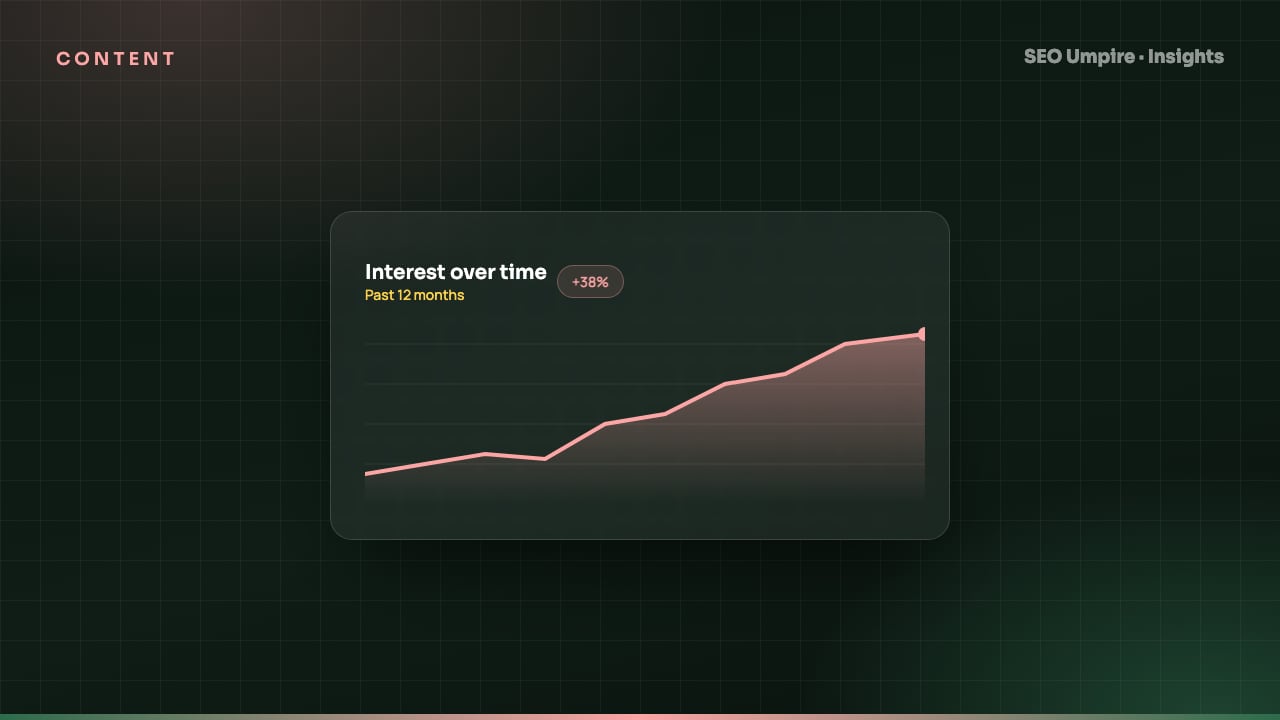
Google Trends for SEO: 9 Ways to Use It for Keywords and Content
How to use Google Trends for SEO: read the 0 to 100 index, compare keyword variants, plan seasonal content, find rising queries and check demand by country.
 Content
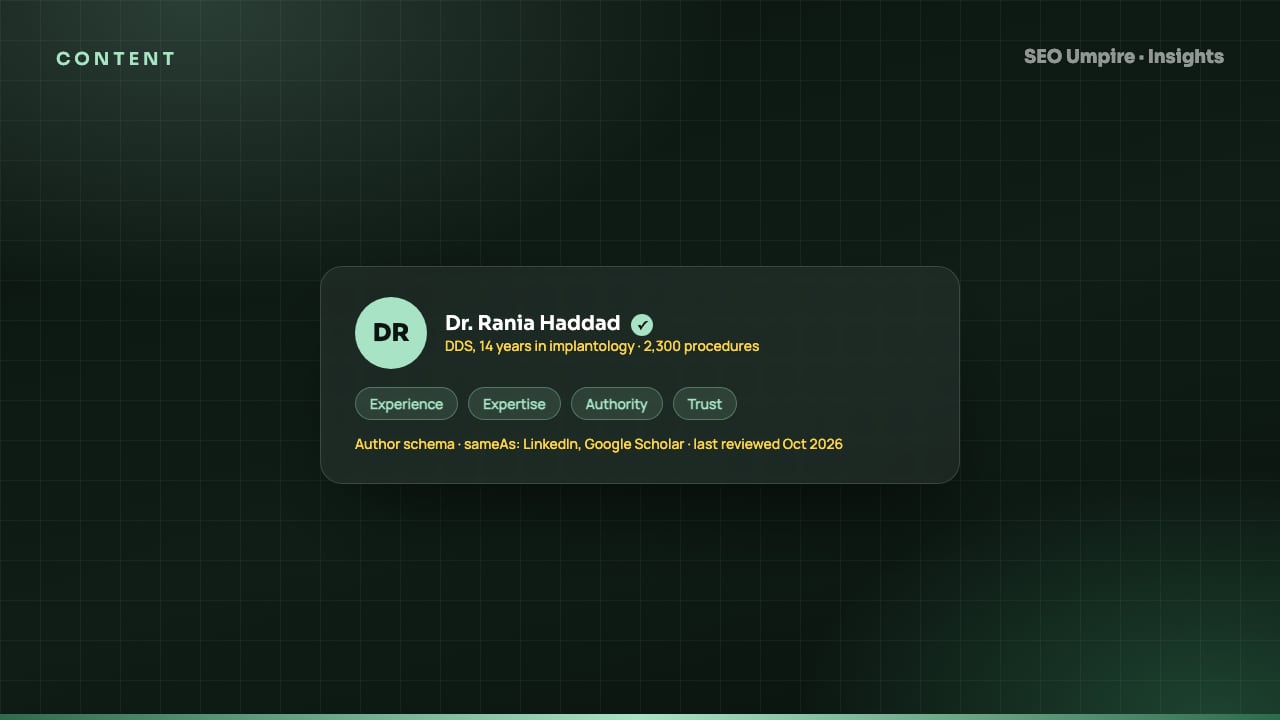
E-E-A-T SEO Guide: How to Show Experience, Expertise and Trust
E-E-A-T SEO explained: what Experience, Expertise, Authoritativeness and Trust mean, why E-E-A-T is not a ranking factor, and 14 on-page signals that show it.
 Content
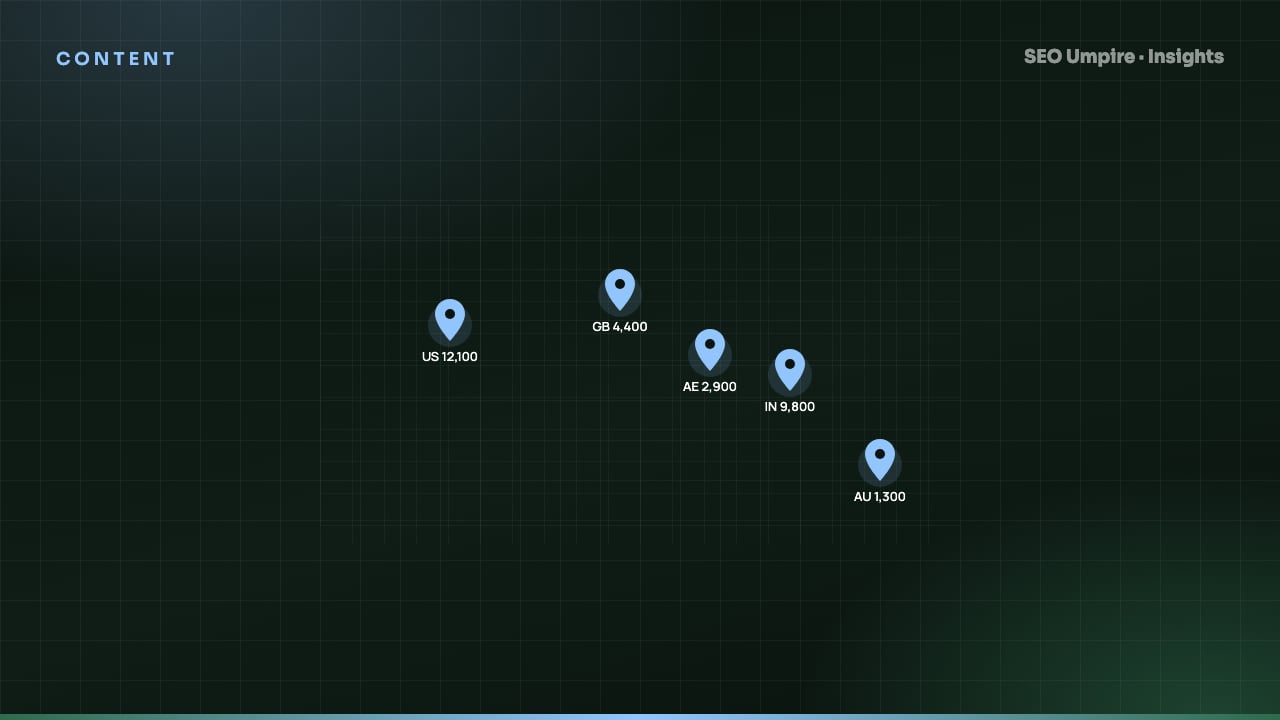
Keyword Research by Country: How to Target Each Market
Keyword research by country pulls volume, difficulty and SERP data per Google country database, then adapts for local language, spelling and intent. The method.
One short email a week: what changed in Google and AI answers, and the fixes that matter. No spam, unsubscribe any time.