

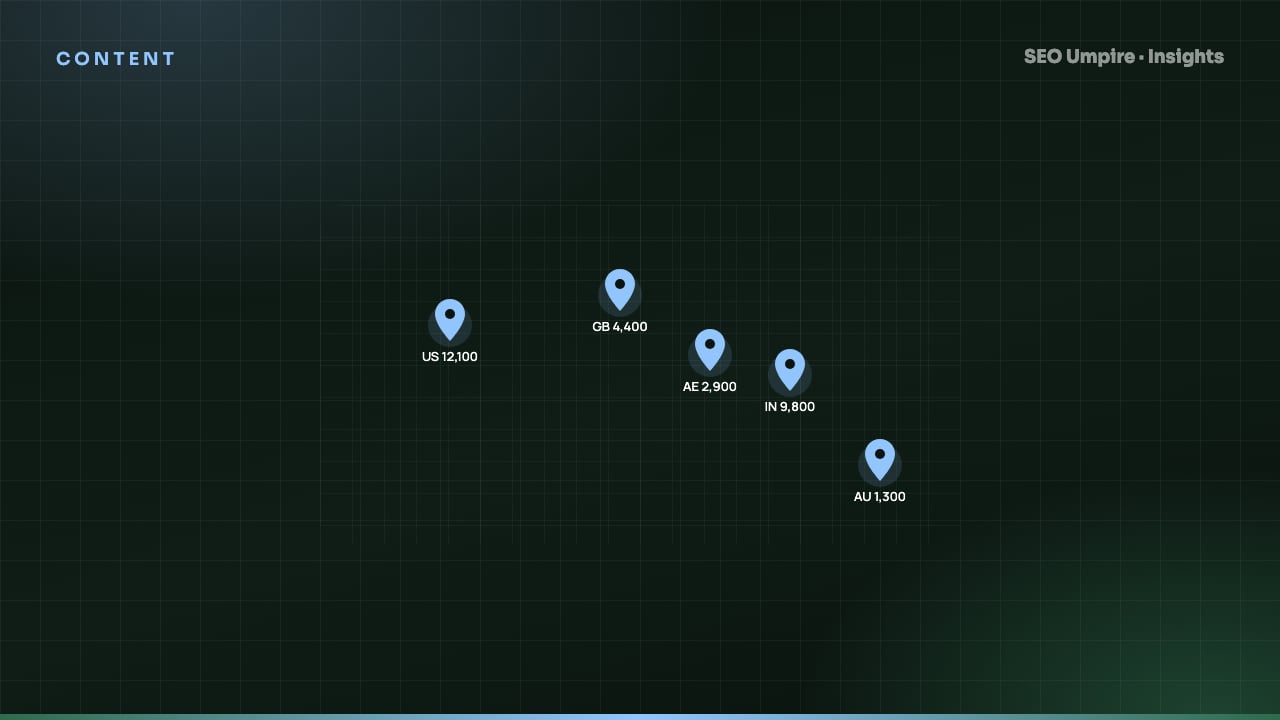
Keyword Research by Country: How to Target Each Market
Keyword research by country pulls volume, difficulty and SERP data per Google country database, then adapts for local language, spelling and intent. The method.
Keyword research by country is the process of pulling search volume, keyword difficulty and the live SERP for a specific country's Google database, then adapting the keyword list for local language, spelling, currency and intent before building pages for that market. It is necessary because the same phrase can have very different demand, competition and meaning in the United States, the United Kingdom, India and the UAE, and Google serves different results in each. Below is the step-by-step method, the prioritization model and the mistakes that waste budget.
Why does keyword research change from country to country?
Google runs a separate ranking environment per country and language. Four things shift between markets:
- Volume. Population and internet use set the ceiling. A term with 40,000 monthly searches in the US might have 3,000 in Canada and 600 in Ireland.
- Vocabulary and spelling. "Sneakers" in the US is "trainers" in the UK; "apartment" becomes "flat"; "color" becomes "colour". Searchers in India often mix English with local terms and use "best ... under 10000" price modifiers.
- Intent. "Football boots" is commercial in the UK and nearly meaningless in the US where the sport is different. The SERP shows which intent Google has learned for each market.
- Competition. Local brands, local directories and country domains dominate many SERPs. A keyword with difficulty 70 in the US can be 25 in New Zealand.
Treating a global keyword list as one market gets all four wrong at once.
How do I do keyword research by country step by step?
- Pick the target countries and languages. Start with where you can legally sell, ship or serve and where you already see traffic in analytics. Note that one country can need two languages (Canada: English and French; Switzerland: German, French, Italian; UAE: English and Arabic).
- Seed the list from local sources, not from translation. Read competitors' local sites, local marketplace categories, local forums and the autocomplete suggestions on the local Google domain. Write down the actual words people use.
- Pull metrics from the right country database. In the keyword research tool, set the country before running the seed list. Record volume, difficulty, CPC and the SERP features present for each term.
- Expand with local modifiers. Add city names, local currency ("under 500 AED"), local spelling variants and local brand names. Check the "people also search for" and related terms for each market separately.
- Verify intent on the live local SERP. Open each priority keyword in the local Google (set
gl=andhl=parameters or use the tool's SERP preview). If the results are informational and you planned a product page, change the plan or the keyword. - Check seasonality per country. Seasons, holidays and school calendars differ. Use the trends tool to compare the same term across countries over 12 months.
- Score and prioritize. Use the model in the next section.
- Map keywords to pages. One primary keyword per country-language page. Decide whether each page needs a separate URL (recommended) or can share content.
How do I prioritize countries and keywords?
Use a simple score per keyword per country, 1 to 5 on each factor, multiplied together:
- Demand: local monthly volume relative to the biggest market.
- Value: CPC or conversion value in that country as a proxy for commercial worth.
- Winnability: inverse of difficulty, adjusted for whether your domain already has authority there (a local ccTLD, local links, existing rankings).
- Serviceability: can you deliver, support and bill in that country and language?
Rank the combined list and start with the top 20 to 30 keywords across markets. A mid-volume keyword in a market where you already rank on page 2 usually beats a high-volume keyword in a country where you have no presence.
Example: the same keyword in five countries
| Country | Local phrase | Relative volume | Difficulty (0 to 100) | Dominant SERP intent |
|---|---|---|---|---|
| United States | running shoes | 100 | 85 | Commercial, big retailers |
| United Kingdom | running trainers | 18 | 70 | Commercial, UK retailers and reviews |
| India | best running shoes under 3000 | 22 | 45 | Commercial with price filter, listicles |
| Australia | running shoes | 9 | 55 | Commercial, local stores |
| UAE | running shoes dubai | 2 | 30 | Local commercial, store locations |
Figures are illustrative to show the pattern, not live data. The point: the UK phrase is different, the Indian phrase carries a price modifier, and the UAE phrase includes a city. A single "running shoes" page would miss three of the five markets.
Should I use country domains, subfolders or subdomains?
| Structure | Example | Pros | Cons |
|---|---|---|---|
| ccTLD | example.co.uk | Strongest geo signal, local trust | Separate authority per domain, expensive to maintain |
| Subfolder | example.com/uk/ | Shares domain authority, one site to run | Needs Search Console geo-targeting and hreflang |
| Subdomain | uk.example.com | Clear separation | Treated almost like a separate site, splits authority |
For most businesses a subfolder per country-language pair (/en-gb/, /en-in/, /ar-ae/) with correct hreflang is the best balance. Each version lists all alternates including itself plus an x-default, and the return links must match. Our technical SEO checklist includes the hreflang validation step.
How do I adapt content per country without duplicating it?
Separate pages for the same language in different countries are legitimate when the content differs in ways that matter to the reader:
- Spelling and vocabulary (colour vs color, trainers vs sneakers).
- Currency, pricing, tax and shipping.
- Legal and regulatory statements.
- Local examples, case studies, cities and phone numbers.
- Local reviews, certifications and payment methods.
If two pages would be word-for-word identical apart from the hreflang tag, use one page and set hreflang to the language only (en) rather than country pairs. Google handles near-duplicate regional pages with hreflang well, but it will fold identical pages together, so make the differences real.
How do I track rankings by country?
A rank reported from your own location is wrong for every other market. Set up each keyword in the rank tracker with its country, language and, for local terms, a city. Track the local URL for that market, not the global one; if Google is showing the US page to UK users, that is a hreflang or canonical problem to fix. Our rank tracking guide covers location settings and how often to check.
Also segment Search Console by country. The Performance report filtered by country shows which queries actually drive impressions per market, which is often the best free keyword research available once you have some traffic.
What mistakes waste the most money in international keyword research?
- Machine-translating the US keyword list and publishing. The volume will be near zero because locals do not say it that way.
- Ignoring the live SERP. A keyword can be informational in one country and transactional in another; the page type must match.
- One page for all English markets with US spelling and pricing. UK and Australian users bounce, and the page competes against local sites that feel native.
- Skipping hreflang or getting the return links wrong, so Google shows the wrong country version.
- Measuring with a global rank. Position 3 "globally" can be position 40 in the country you care about.
Run the free SEO checker on each country version after launch; it flags missing or inconsistent hreflang and canonical tags that silently route traffic to the wrong market. SEO Umpire's keyword and rank tools let you set the country per project so the data you plan on and the data you measure come from the same market.
Frequently asked questions
Why does keyword volume differ by country?
Each Google country database counts searches from users in that location. Population, internet penetration, language and local buying habits all change how often a term is searched. The same English phrase can have 10 times the volume in the US as in Australia and a different top result in each.
Should I use one page for all English-speaking countries?
Only if the content, pricing, spelling and legal context are identical. Usually they are not. Separate pages per country with hreflang let you use local spelling, currency and examples, and they rank better in each local SERP.
What is the best keyword tool for country-level data?
Any tool that lets you select a country database and shows local volume, difficulty and the live SERP for that location. Google Keyword Planner and Google Trends give free country-level signals; a dedicated research tool adds difficulty and competitor data per country.
How do I check rankings in another country?
Use a rank tracker that sets the search location and language per keyword, or use a VPN with Google's country domain and the gl and hl URL parameters. Never trust a search from your own location, because results are geo-personalized.
Free audit, 32 checks, prioritized fixes and a PDF report in about 15 seconds. No signup.
Keep reading
 Content
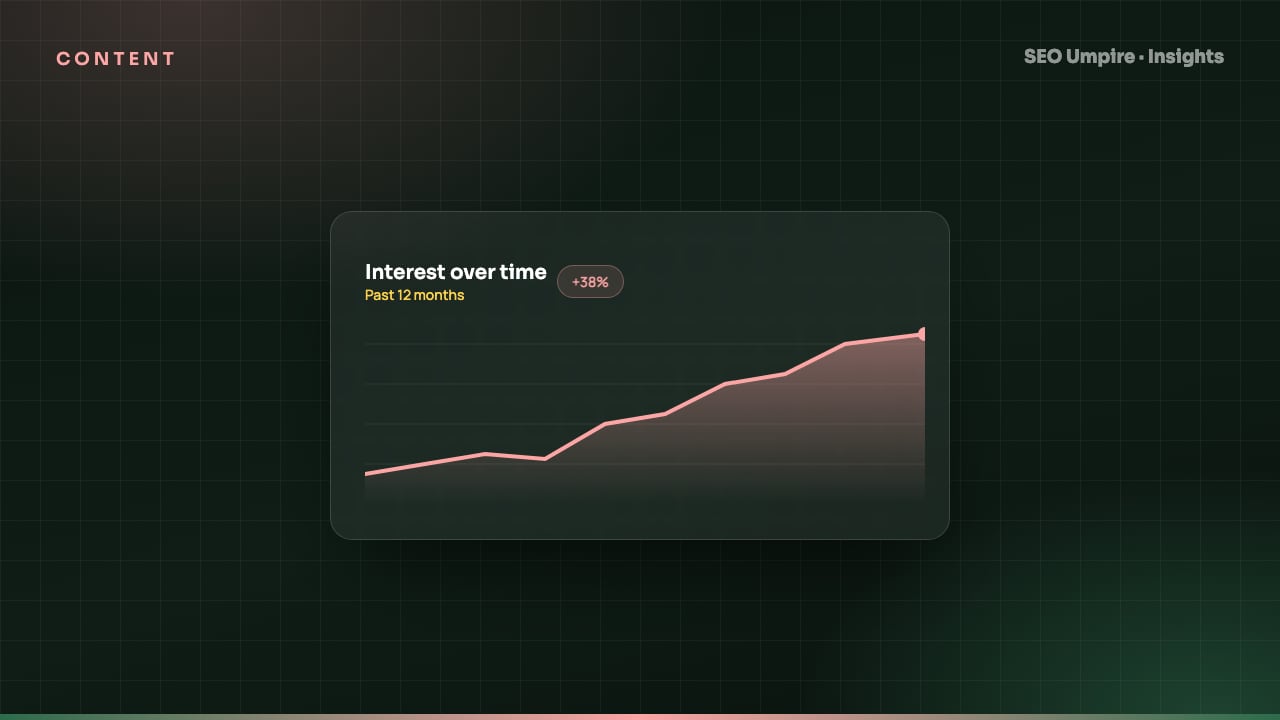
Google Trends for SEO: 9 Ways to Use It for Keywords and Content
How to use Google Trends for SEO: read the 0 to 100 index, compare keyword variants, plan seasonal content, find rising queries and check demand by country.
 Content
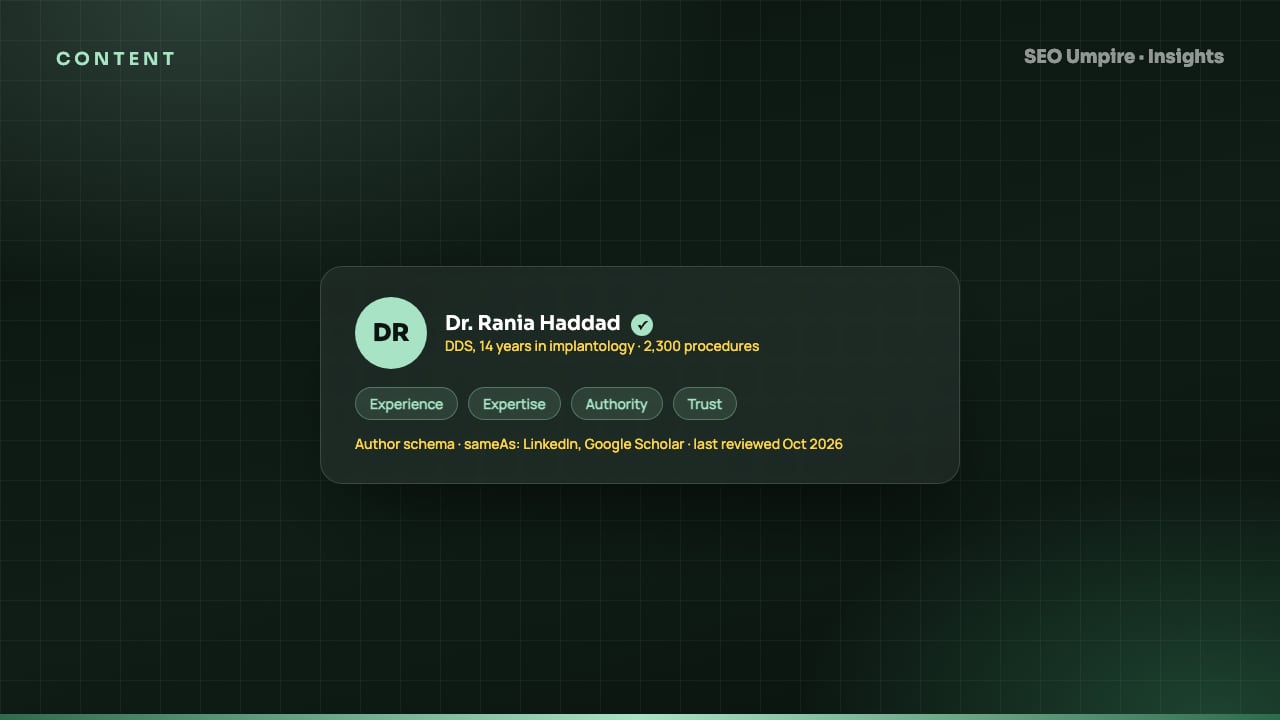
E-E-A-T SEO Guide: How to Show Experience, Expertise and Trust
E-E-A-T SEO explained: what Experience, Expertise, Authoritativeness and Trust mean, why E-E-A-T is not a ranking factor, and 14 on-page signals that show it.
 Content
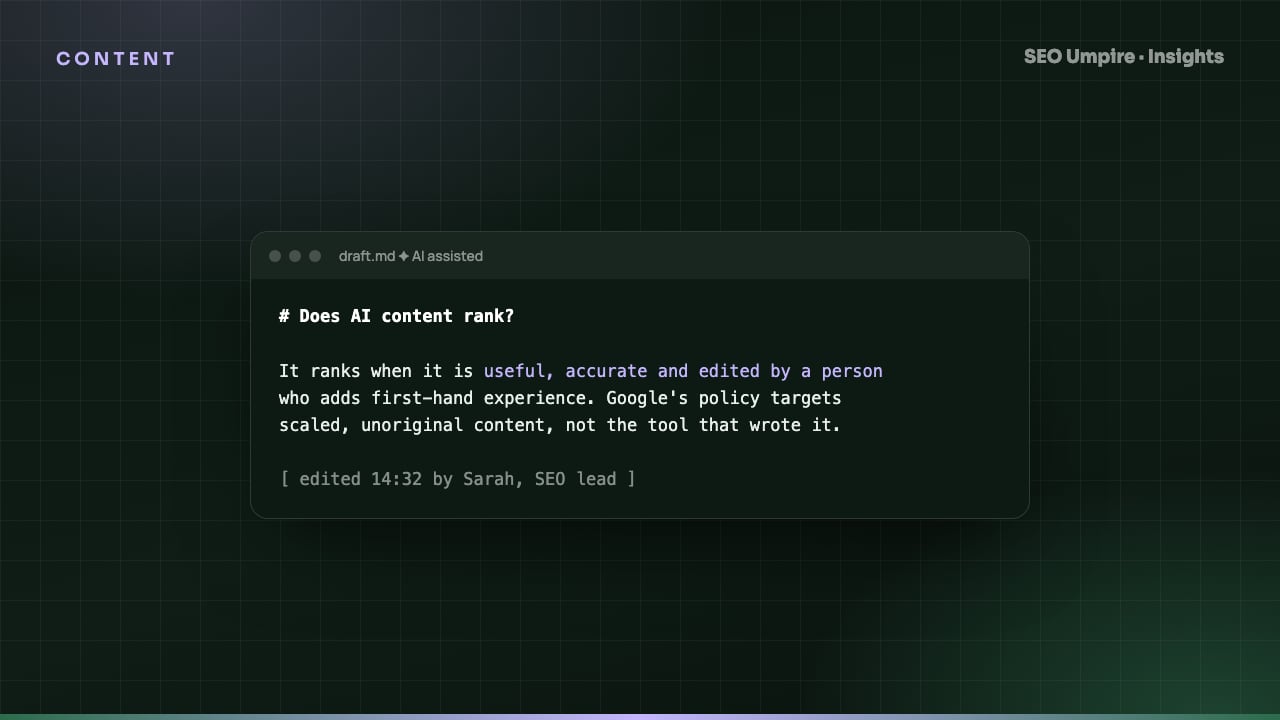
Does AI Content Rank on Google? What Actually Works in 2026
Does AI content rank? Yes when it is accurate, original and reviewed; no when it is mass-produced filler. What Google's policy says and a workflow that ranks.
One short email a week: what changed in Google and AI answers, and the fixes that matter. No spam, unsubscribe any time.